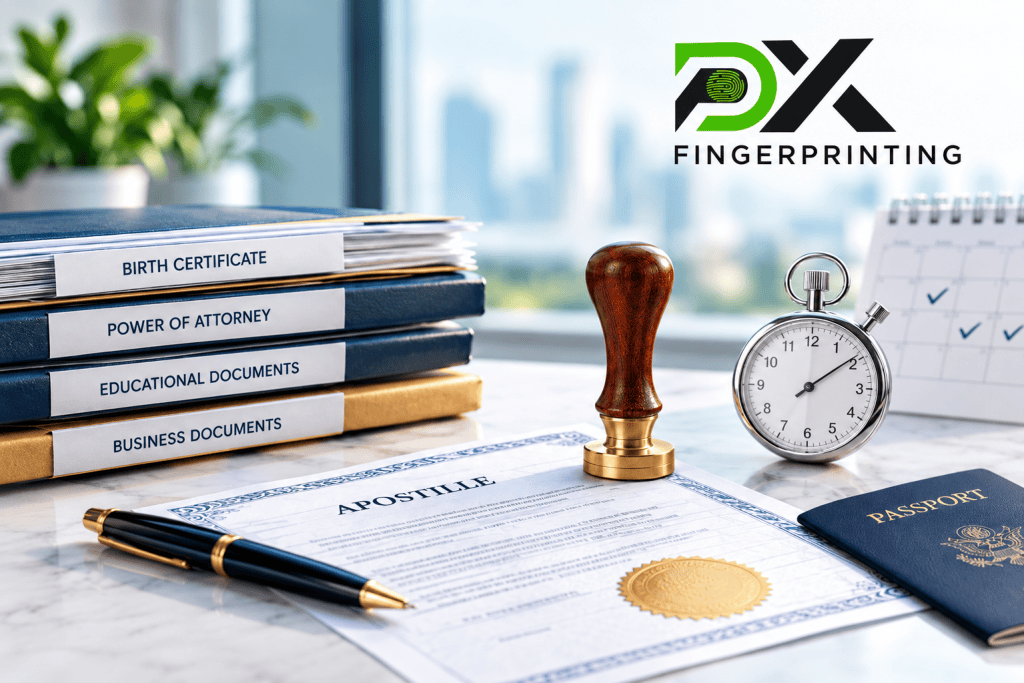
If you have ever needed a document authenticated for use in another country, you already know how confusing the process can feel. Between courts, county clerks, state offices, and federal agencies, it is easy to lose track of what needs to happen next. That is exactly why so many people turn to professional apostille services instead of trying to navigate the system alone.
At its core, an apostille is a certification that verifies the authenticity of a public document so it can be recognized in another country that participates in the Hague Convention of 1961. Whether the document is a birth certificate, a marriage record, a diploma, or a court order such as a name change decree, the apostille confirms that the signature, seal, and authority behind that document are genuine. Without it, many countries will simply refuse to accept an American document, no matter how official it looks.
This article breaks down five practical secrets that can help you save time, avoid frustration, and get your paperwork authenticated correctly the first time. Along the way, we will also explain how apostille services connect to the world of fingerprinting, background checks, and identity verification, which is where our team at pdxfingerprinting.com spends most of our working days.
Why Apostille Services Matter More Than People Realize
Most people do not think about apostilles until they absolutely need one. Maybe you are applying for citizenship in another country, registering a marriage abroad, enrolling in a foreign university, or finalizing paperwork tied to a legal name change that took place in a United States court. In every one of these situations, the receiving country wants proof that the document in front of them is real and that it was issued by someone with the legal authority to issue it.
That proof comes through apostille services. A county clerk, such as the Kings County Clerk in New York, often certifies that a signature on a document belongs to a specific official, like a federal court clerk. From there, a state Secretary of State office adds its own certification confirming that the county clerk is who they claim to be. The result is a chain of authentication that a foreign government can trust, even though it has no direct way to verify a small county office on its own.
For a document like a federal court petition for name change, this chain matters enormously. A name change granted by a United States District Court is a significant legal event. If that person later needs to use their new legal name internationally, whether for immigration, employment, education, or family matters, the apostille is what makes the American court order meaningful outside the United States.
Secret 1: Not Every Document Needs the Same Path
One of the biggest misunderstandings people have about apostille services is assuming that every document follows the same process. In reality, the path depends heavily on where the document originated and who issued it.
A document issued directly by a state agency, such as a state issued birth certificate, generally goes straight to the Secretary of State for apostille certification. A document tied to a federal court, on the other hand, often requires an extra layer. Federal court records frequently need to be certified by a county clerk first, confirming that the signature of the federal clerk is authentic, before the state will add its own apostille.
This is precisely the kind of layered certification you see with federal name change decrees. The county clerk certifies the federal court clerk’s signature, and only then does the state apostille get attached. Skipping this step, or assuming a document can go straight to the state without the intermediate certification, is one of the most common reasons paperwork gets rejected and sent back for correction.
Good apostille services will know these routing requirements cold. They will tell you upfront whether your document needs an intermediate certification, saving you a wasted trip or a delayed application.
Secret 2: Timing Windows Can Make or Break Your Plans
Apostille processing is rarely instant. Depending on the state and the current volume of requests, turnaround times can range from a few business days to several weeks. If you are applying by mail, add shipping time in both directions.
This becomes especially important when a name change, marriage, adoption, or immigration deadline is attached to the paperwork. Imagine someone who received a legal name change from a federal court and now has thirty days to submit authenticated documents for an international application. If they wait until the deadline is close, they may not have enough time to get the county certification, the state apostille, and any required translation completed before their window closes.
Experienced apostille services build in realistic timelines and often offer expedited processing for people working against a deadline. They also know which state offices tend to move faster and which routinely experience backlogs, which can help you plan more accurately instead of guessing.
Secret 3: Errors on the Original Document Cause Bigger Delays Than You Think
Here is something many people do not expect. An apostille does not fix problems with the underlying document. It only certifies that the signature and seal on that document are authentic. If the original document has an error, such as a misspelled name, an incorrect date, or missing information, the apostille will not correct it, and in many cases the receiving country will reject the packet entirely.
This is particularly relevant for court ordered name changes. If the petition itself contains inconsistent spellings of a name, or if supporting details like a date of birth do not match other identity documents, those inconsistencies can follow the paperwork all the way through the apostille process and cause problems on the receiving end, sometimes months later when the person least expects it.
Before requesting apostille services, it is worth carefully reviewing the original document for accuracy. Compare names, dates, and identifying numbers against passports, birth certificates, and any other official records the person holds. Catching a small error early is far less costly than discovering it after the apostille has already been issued.
Secret 4: Apostille Services and Fingerprinting Often Go Hand in Hand
This is where our work at pdxfingerprinting.com intersects directly with the apostille process. Many international applications, especially those related to immigration, adoption, employment abroad, or dual citizenship, require an FBI background check in addition to an apostilled document. That FBI report itself often needs to be apostilled before a foreign government will accept it.
To request an FBI background check, applicants typically need a full set of fingerprints captured on an approved FD 258 card or submitted electronically through an approved channel. Errors here can be just as costly as errors on a legal document. Smudged prints, incorrect card formatting, or missing personal information can result in the FBI rejecting the submission, which then delays the entire apostille timeline that depends on it.
We regularly work with clients who need fingerprinting done correctly the first time specifically because they are on a clock tied to an apostille deadline. Once the FBI background check comes back, it typically needs to be sent to the U.S. Department of State for its own apostille certification before it can be used internationally. Understanding this connection between fingerprinting and apostille services helps applicants plan the entire sequence instead of tackling each step in isolation and losing time between stages.
Secret 5: Choosing the Right Provider Saves You From Doing It Twice
Not all apostille services are created equal. Some providers simply mail your documents to the state and wait, offering little guidance along the way. Others actively review your paperwork, flag potential issues before submission, track processing times, and communicate proactively if something is missing or incorrect.
When evaluating apostille services, look for a provider who can clearly explain the specific requirements for your document type. A federal court name change decree, a college diploma, and a corporate document for international business each have different requirements, and a provider who treats every request identically is more likely to make mistakes.
It also helps to choose a provider who understands related processes, such as fingerprinting for background checks, notarization, and document translation, since international applications frequently require more than just the apostille itself. A provider who can guide you through the full picture, rather than just one piece of it, will almost always save you time compared to piecing the process together from multiple unrelated sources.
A Closer Look at the Apostille Process Step by Step
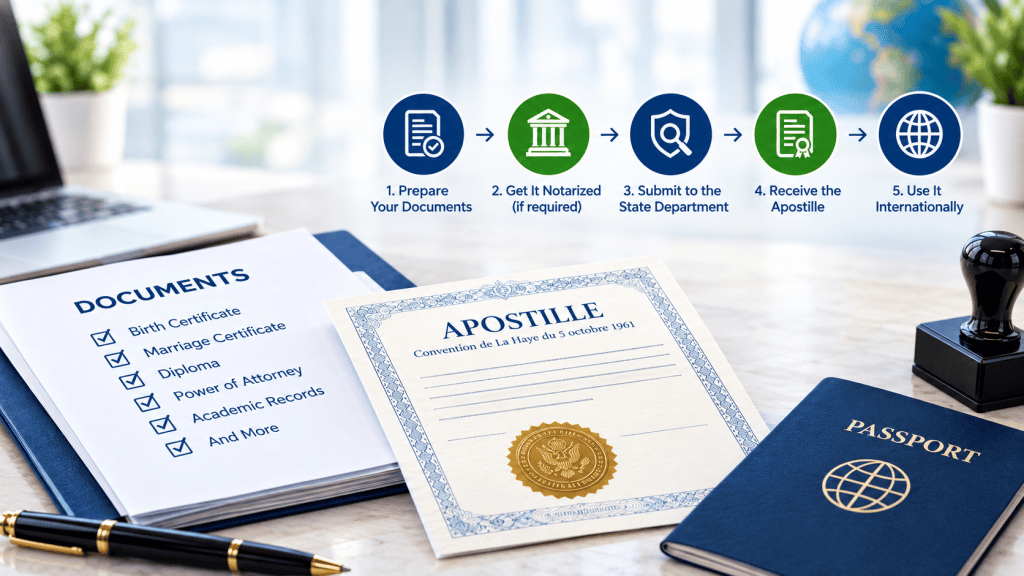
To make this more concrete, here is a general overview of how apostille services typically work for a document such as a court ordered name change.
First, the applicant obtains a certified copy of the original court document, since apostille offices generally will not accept a plain photocopy. Second, if the document was issued by a federal court, the applicant may need a county clerk to certify the signature of the federal court clerk. Third, the certified document is submitted to the Secretary of State office in the relevant state, along with any required fee, for the apostille itself to be attached. Fourth, once the apostille is issued, the document is ready to be presented to the foreign government, institution, or agency that requested it.
Throughout this sequence, apostille services can handle the submission, track the status, and confirm that each certification was issued correctly before moving to the next stage. This reduces the chance of a costly rejection at the final destination, which can be far more difficult to resolve once you are already dealing with an international agency instead of a local county office.
Common Questions About Apostille Services
Does every country accept an apostille?
No. Apostilles work for documents used in countries that are part of the Hague Apostille Convention of 1961. If the destination country is not a member, the document instead needs a process called authentication or legalization, which usually involves the destination country’s embassy or consulate.
Can apostille services help with documents tied to a legal name change?
Yes. Court issued name change decrees are exactly the kind of document that often requires apostille certification when the new legal name needs to be recognized internationally, such as for immigration paperwork, foreign employment, or updating identity records abroad.
How long does the apostille process usually take?
It depends on the state and current demand, but a reasonable range is anywhere from a few business days for expedited requests to several weeks for standard processing. Building in extra time is always wise, especially around holidays or peak application seasons.
Do I need fingerprinting for an apostille?
Not for every document, but if your application requires an FBI background check, such as many international adoption or immigration cases, you will need accurate fingerprints first. That background check may then need its own apostille before it can be used abroad.
Can I do this without professional apostille services?
In many cases, yes, individuals can submit documents directly to the state themselves. However, without experience in the specific requirements for each document type, mistakes are common, and those mistakes tend to cost more time than simply working with a knowledgeable provider from the start.
Bringing It All Together
Apostille services exist to solve a real and often stressful problem: making sure an American document, whether a birth certificate, a diploma, or a federal court name change decree, is trusted and accepted somewhere far outside the county or state where it was originally issued. The process involves multiple layers of certification, strict formatting requirements, and timelines that do not always cooperate with personal deadlines.
By understanding these five secrets, knowing that documents follow different paths, respecting realistic timing windows, catching errors before submission, recognizing the connection between fingerprinting and apostille services, and choosing a provider who understands the full picture, you put yourself in a much stronger position to get everything done correctly the first time.
If your situation involves an FBI background check as part of an international application, our team at pdxfingerprinting.com can help make sure your fingerprints are captured accurately and submitted correctly, so the rest of your apostille services process moves forward without unnecessary delays. Getting fingerprinting right at the start is one of the simplest ways to avoid the kind of setback that pushes an entire international application back by weeks or months.
Whether you are dealing with a court ordered name change, a background check for adoption, or paperwork for employment abroad, taking a careful and informed approach to apostille services will save you time, money, and a great deal of frustration down the road.